
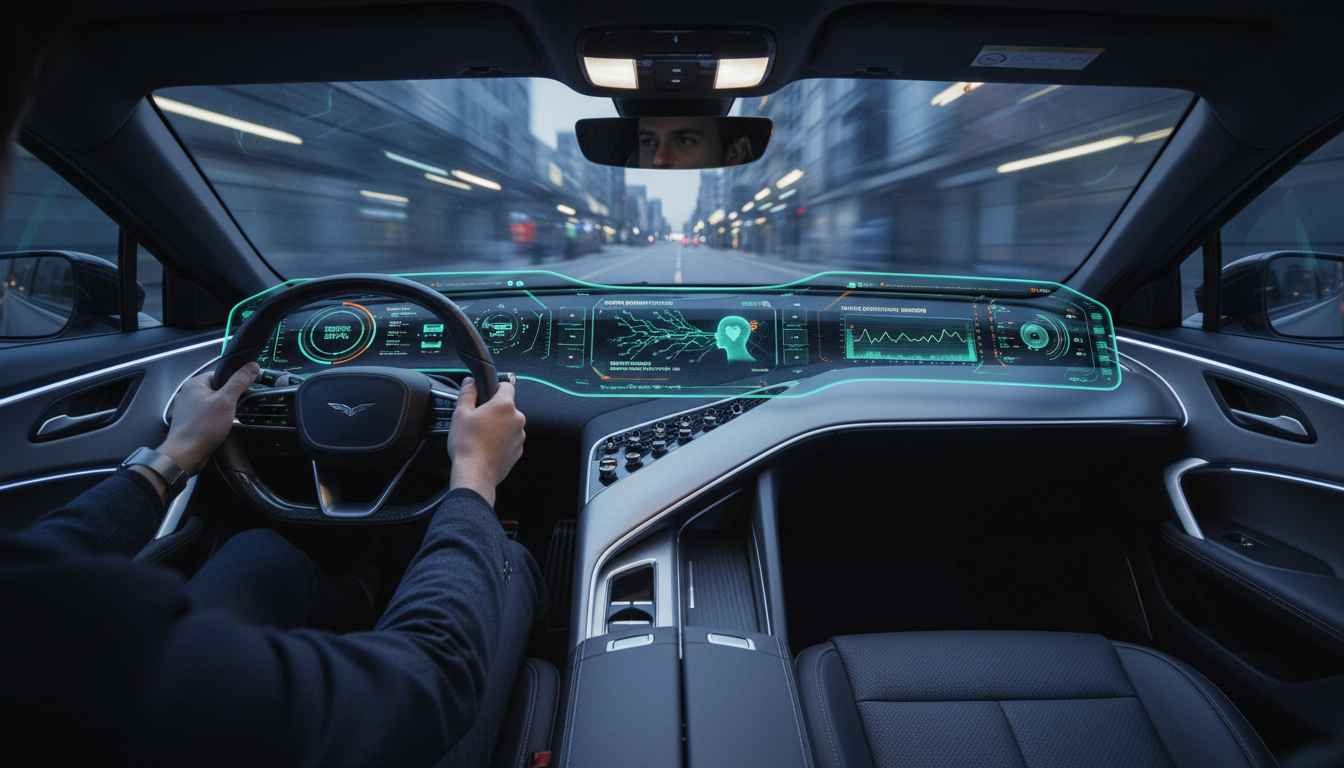
It seems paradoxical that the fastest cars on the planet are also the most dependent on slow, deliberate analysis. Modern automotive innovation thrives not just on engineering horsepower, but on the quiet, precise power of data science. Every sensor, every telemetry readout, and every driver interaction generates streams of information that, when decoded, transform how we understand vehicle performance and human behavior behind the wheel.
Automotive data science is no longer a niche experimental field; it has become the backbone of cutting-edge research, development, and predictive modeling in the automotive industry. By leveraging sophisticated algorithms, machine learning models, and biometric tools, engineers and researchers can extract insights that were previously invisible, guiding decisions from vehicle design to traffic management and even driver safety programs.
At its core, automotive data science combines traditional mechanical engineering with computational analytics. Sensors embedded in vehicles record acceleration, braking patterns, tire pressure fluctuations, engine temperatures, and more. These data points, when processed using statistical models and machine learning, create predictive frameworks that can anticipate failures, optimize fuel efficiency, and even tailor in-car experiences to individual drivers. Advanced platforms like iMotions offer biometric data analysis that enhances this process by capturing physiological and emotional responses during vehicle operation, providing an unprecedented depth of understanding.
The Anatomy of Automotive Data Science
The field can be segmented into three primary domains: data acquisition, data processing, and actionable insight generation. Data acquisition involves the deployment of sensors and monitoring tools throughout the vehicle. Modern cars can contain hundreds of sensors, each producing continuous streams of data. Beyond mechanical metrics, newer approaches integrate driver monitoring systems that track eye movement, heart rate variability, and even micro-expressions to understand driver state and behavior.
Data processing is where the magic happens. Raw data is messy, inconsistent, and often too voluminous for traditional analysis methods. Advanced statistical techniques, neural networks, and machine learning pipelines clean, normalize, and interpret this data. Predictive models are trained on historical datasets, detecting patterns that humans would miss. The outcome is a system that can forecast maintenance needs, predict driver fatigue, or optimize route efficiency based on real-time conditions.
Actionable insights are the final product, transforming numbers into decisions. Vehicle manufacturers use these insights to refine mechanical designs, enhance safety protocols, and deliver personalized driving experiences. Fleet operators rely on predictive analytics to reduce downtime and operational costs. Meanwhile, urban planners can harness aggregated automotive data to improve traffic flow, minimize congestion, and reduce emissions in smart city initiatives.
Technologies Powering the Revolution
The technologies underlying automotive data science are as diverse as they are sophisticated. Sensor arrays in modern vehicles include LIDAR, RADAR, ultrasonic sensors, and accelerometers. These capture detailed environmental and mechanical data, often in real time. Simultaneously, software platforms apply data fusion techniques to integrate multiple sources, creating comprehensive digital models of vehicle performance.
Machine learning and AI algorithms are indispensable. Supervised learning models predict component wear based on historical patterns, while unsupervised learning identifies anomalies that could indicate emerging issues. Reinforcement learning is increasingly applied in autonomous vehicle systems, allowing AI agents to optimize driving strategies in complex traffic environments. Beyond performance metrics, biometric tools quantify driver reactions to various driving scenarios, enabling a deeper understanding of human factors that influence safety and comfort.
Cloud computing and edge analytics play a complementary role. Vehicles can transmit large datasets to cloud servers for deep analysis while performing real-time computations locally for immediate decision-making. This hybrid approach allows manufacturers to benefit from large-scale analytics without compromising on latency-critical tasks like collision avoidance or adaptive cruise control.
Applications in Vehicle Safety and Performance
One of the most impactful applications of automotive data science is safety enhancement. By analyzing driver behavior and physiological indicators, systems can detect fatigue, distraction, or stress. Predictive models forecast when a component is likely to fail, enabling preventative maintenance that reduces the risk of accidents. Some companies even use real-time feedback loops to alert drivers when biometric signals suggest impaired focus, bridging human intuition and machine precision.
Performance optimization is another domain where automotive data science excels. Engine tuning, fuel efficiency, tire wear, and suspension behavior can all be monitored and adjusted based on data-driven insights. Motorsport teams have been leveraging telemetry for decades, but now the principles are being democratized across commercial vehicles. By combining mechanical data with driver behavior analytics, vehicles can be tailored to individual preferences, delivering smoother, safer, and more efficient rides.
Urban Planning and Smart Mobility
Beyond individual vehicles, automotive data science is transforming urban landscapes. Aggregated vehicle data informs traffic light optimization, congestion prediction, and public transit scheduling. Cities can simulate traffic scenarios to anticipate bottlenecks and reduce commute times, while environmental agencies can monitor emissions and implement adaptive policies. Autonomous and semi-autonomous vehicle fleets rely on constant data streams to navigate urban environments safely and efficiently, creating a synergy between individual vehicle performance and city-wide transportation efficiency.
Potential Drawbacks and Considerations
Despite its transformative potential, automotive data science has limitations and potential drawbacks. Data privacy is a pressing concern; collecting detailed biometric and behavioral data raises ethical and legal questions. Over-reliance on predictive models may lead to complacency in manual safety practices, and algorithmic biases can inadvertently favor certain demographics or driving styles. Additionally, the integration of high-tech systems increases the cost and complexity of vehicles, potentially limiting accessibility for smaller markets or budget-conscious consumers.
Another challenge is the sheer volume of data generated. High-fidelity sensors produce terabytes of information daily, necessitating robust storage, processing, and security infrastructure. Without proper standardization, interoperability between different vehicle models or software platforms can be a bottleneck. Therefore, organizations must balance innovation with ethical responsibility, ensuring that automotive data science enhances safety, efficiency, and driver experience without unintended consequences.
Who Should Avoid This?
Automotive data science is not for every organization or individual. Small-scale automotive startups without access to robust computational resources may find implementation cost-prohibitive. Similarly, companies lacking expertise in data analytics or cybersecurity may inadvertently expose themselves to vulnerabilities. Individual drivers seeking minimalistic or low-tech vehicles may not benefit meaningfully from data-driven features, and should weigh convenience against cost and potential privacy concerns.
The Future of Automotive Data Science
The trajectory of automotive data science points toward deeper integration with artificial intelligence, autonomous systems, and human-centric design. Vehicles will become increasingly self-aware, capable of not only responding to immediate conditions but anticipating them. Biometric feedback and emotional state monitoring will evolve from experimental tools to standard features, enabling adaptive driving experiences tailored to individual needs and contexts.
Furthermore, as data-sharing frameworks mature, inter-vehicle communication and collective intelligence will enhance traffic safety and efficiency on a systemic scale. Predictive maintenance will evolve into proactive health monitoring of entire fleets, reducing operational costs and environmental impact. The convergence of mechanical engineering, data analytics, and human-centered design promises a future where vehicles are not only faster or smarter, but fundamentally safer and more responsive companions on the road.
Automotive data science is no longer a luxury; it is a necessity for anyone serious about understanding vehicle dynamics, driver behavior, and urban mobility patterns. As sensors proliferate, machine learning algorithms advance, and biometric insights deepen, the line between mechanical engineering and computational science blurs, heralding a new era of intelligent mobility.
